Atlanta is a city with a diverse population. Both inside and outside the metro-Atlanta parameters, you can find individual communities for the diverse cultures. In the Duluth and Norcross area, it is predominantly Hispanic. In Suwannee, Lawrenceville, and Alpharetta you can find many Asian, Indian, and Middle Eastern families. In the Atlanta, Lithonia, and Stone Mountain areas you will find that it is home to many Caribbean and African communities. These communities may differ uniquely from their own customs and cultures, but they can be brought together by one single plant.

Plantains are staples in many dishes for ALL of the communities. Plantains can be fried, baked, or boiled. Depending on how it is prepared, the plantain can take on many names. In some African countries, fried plantain is called dodo. In Afro-Caribbean islands, it is called plantain. In Spanish- speaking countries, it can have a variety of names. It ranges from platano maduro, tostone, cotija, patacon, and more. In the next few blog posts, I’ll be making my way downtown to educate you all on the differences, show yall some sweet spots to visit for some authentic flavor, and most of all inspire the inner foodie that lives within us all.

The first stop was a Jamaican restaurant that can be found right here on Georgia State’s campus. I visited Mangos Caribbean Restaurant which is located on 180 Auburn Avenue NE. This place serves one of THEE BEST sweet fried plantains. I went around lunch time, so the line was pretty long. A side order of plantains costs $4. Unfortunately I could not use a debit card unless my purchase is over $6.
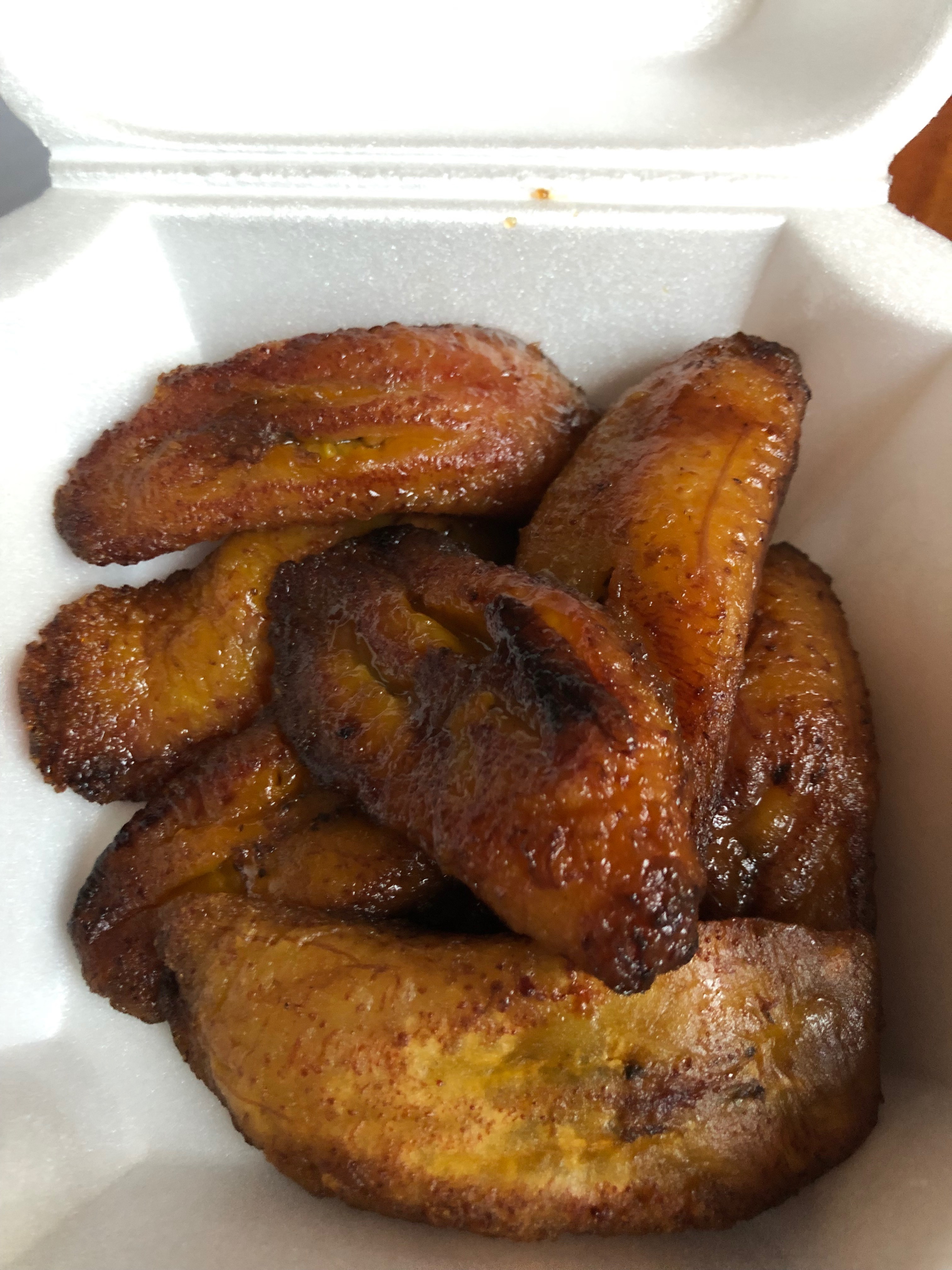
The taste was very sweet and had a mushy texture to it. Some people may think that plantains should have a hard texture of they were fried. I would definitely rate this as comfort food. It makes you feel happy when you eat it. According to an article titled History of Plantain, from africanfoods.co.uk, the fruit was first introduced to the Caribbean city of Santo Domingo by a Portuguese Franciscan Monk in 1516. The article also states, “Plantain found its way into Madagascar from Malaysia and India through trading Asian merchants and by Arabs during the Trans-Saharan trade boom”.
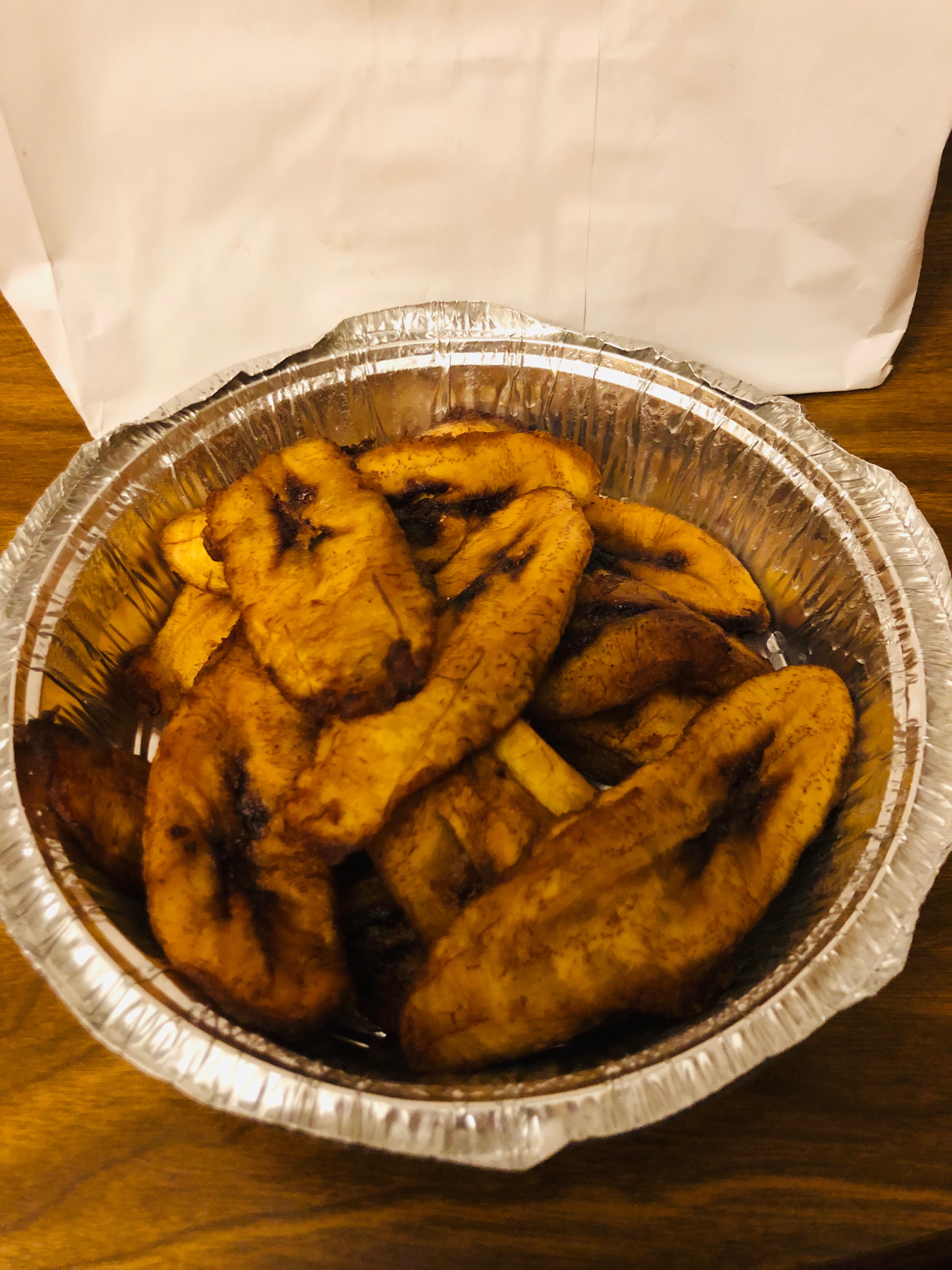
I forgot to mention, it took me two hours to visit these restaurants in one day… with the infamous ATL traffic smh. I got in my Chevrolet Cruze and drove from Auburn Ave to Rockbridge Rd. ALLLLLL the way in Stone Mountain, GA. I got these plantains from a Nigerian restaurant, The African Grill, located on 3965 Rockbridge Rd. With tax, my total was $3.31. For this small amount, they wouldn’t let me pay with card. Cash only. I’m not a fan of hard fried plantains but these were okay. It wasn’t sweet, I’m guessing green plantains were used, and it was hot. I only had issues with the flavor and the texture. The flavor tasted a bit like the smell of propane and they were super dry. If I had to add my opinion to the Jamaican vs. Nigerian plantain debate… I would totally go with Jamaican.

 Culturally Delicious